
The Other Faces of Paucartambo
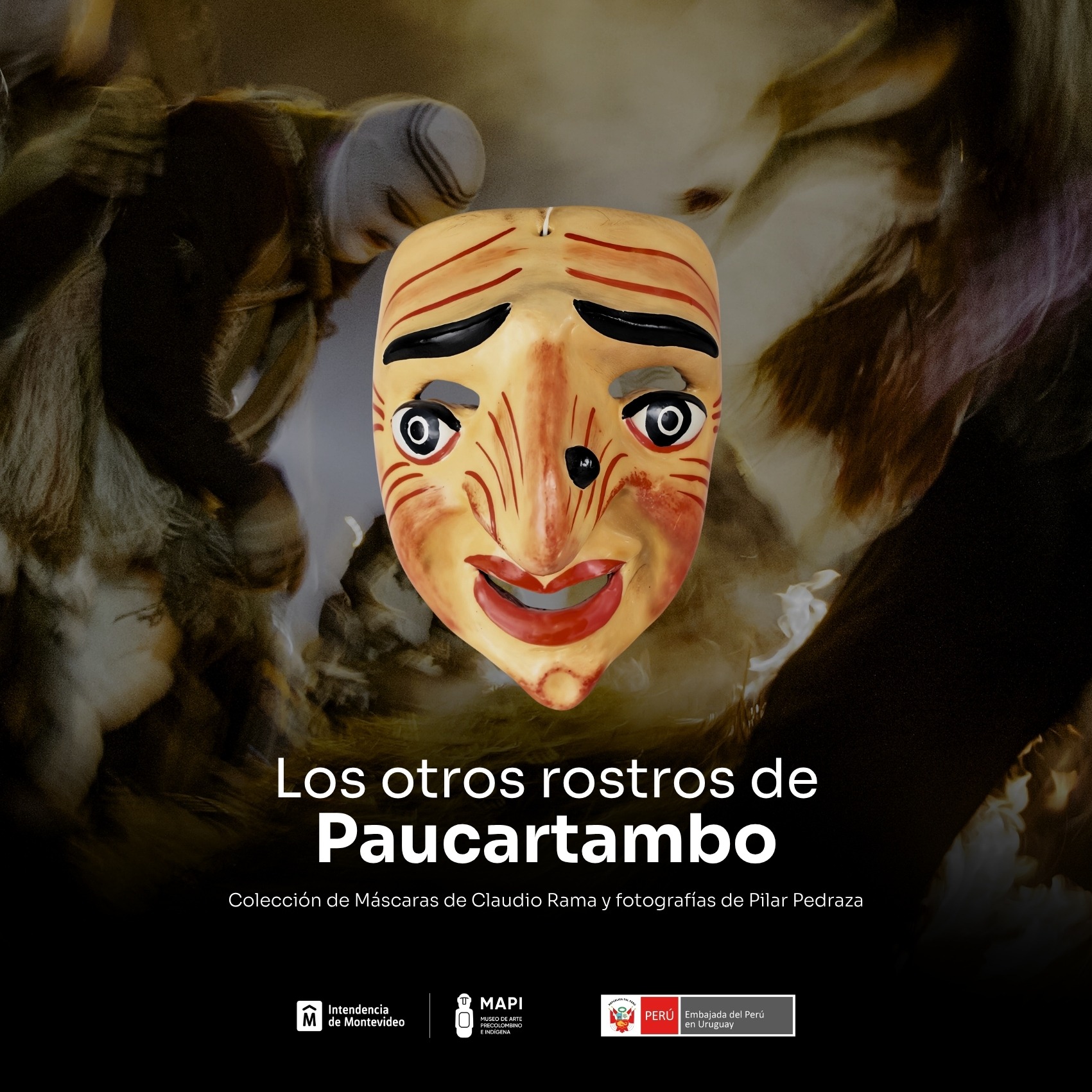
The Other Faces of Paucartambo, an exhibition that invites us to approach the symbolic power of masks and their central role in one of the most significant celebrations of the Andean world.
The exhibition brings together Claudio Rama’s mask collection and photographs by Pilar Pedraza in a visual journey through the festival of the Virgen del Carmen of Paucartambo, a mestizo, Andean, Catholic and folk celebration held every year from July 15 to 18 in the town of Paucartambo, Peru.
Also known as the festival of Mamacha Carmen, this celebration dates back to the 17th century, when the Spanish Crown sent the image of the Virgen del Carmen to Paucartambo. Today, 19 groups of dancers take part in it and, through their masks, costumes, music and choreographies, bring historical and mythical characters to life.
In this festivity, masks do not function merely as decorative objects or elements of concealment. They transform the dancer’s body into a ritual body, capable of taking on another identity and acting as a mediator between different worlds. The mask does not only cover the face: it reveals, transforms and changes the perception of the beholder.
Made collectively with materials such as plaster, cardboard, wool or metal, the masks represent human figures, animals and mythical beings. Many of them are created by master mask makers who are also dancers, so each piece springs from a deep knowledge of the body, tradition and the festive experience.
Through this exhibition, MAPI proposes a view of the mask as a bearer of memory, identity and transformation. The Other Faces of Paucartambo invites us to discover how festivity, ritual and collective creation keep alive a cultural continuity that unites devotion, history and the Andean worldview.
The exhibition is organized together with the Embassy of Peru in Uruguay.