
The MAPI launches a game for children
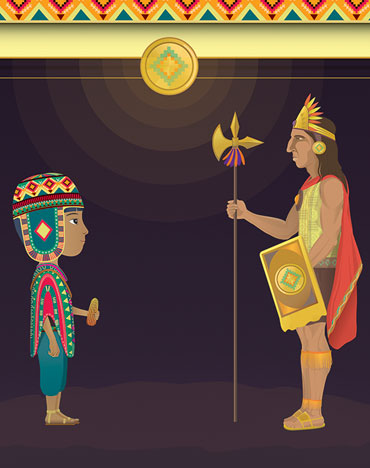
The MAPI, Museum of Pre-Columbian and Indigenous Art of Montevideo, presents “Tukano”, a game for the ceibalitas—the netbooks of Plan Ceibal—which can also be used on any computer.
The game was developed by Ave Interactive with funding from Ibermuseos, after the project won First Prize in the Incubator category of the 2011 Ibero-American Museum Award, granted by the specialized museums body of the Organization of Ibero-American States (OEI).
“Tukano” is a game for children between 4 and 10 years old, in which players step into the shoes of a young Indigenous boy from the Andean region to learn, through play, about different aspects of the culture of the Indigenous groups of that part of the Americas. The final goal is to become a “Shaman”.
The game runs on the XO computers—or ceibalitas—and aims to introduce participants to general knowledge about Indigenous groups. Each level is set in one of the region’s characteristic landscapes: coast, valley, and jungle, and the activities the characters must carry out relate to economic life—gathering and food production—daily life—music—and the magical/religious sphere—the use of medicinal plants—among other resources.
The choice of Andean cultures was connected with the aim of reaching out to the migrant population, which is predominant in the MAPI’s surrounding area (Ciudad Vieja, Montevideo), currently home to many immigrants from the Andean countries.
The development of this application, which can be accessed free of charge through the MAPI website, is part of the Interactive Museography Plan the museum has been carrying out since 2011, whose purpose is to develop a participatory museum experience that is attractive to all segments of the population.
This application, which takes advantage of the infrastructure of Plan Ceibal—every child in Uruguay’s public primary and secondary schools has a personal computer—allows the MAPI’s contents to reach the entire country, and the world, through the appropriation of Information and Communication Technologies (ICTs).