
Indigenous Peoples: Two Views
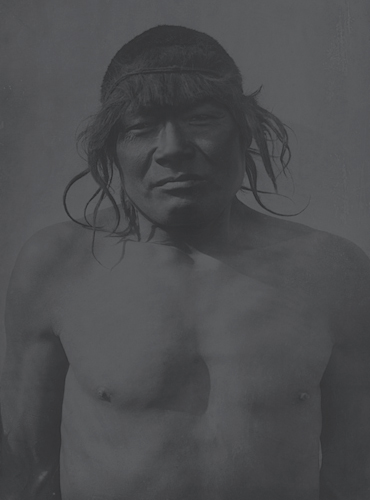
The Centro Cultural de la Memoria Haroldo Conti, MAPI and the CdF present the exhibition “Two Views” as part of Fotograma ’13.
AN AFFIRMATION OF IDENTITY
After the extermination campaigns of the late 19th century, photographs of the Indigenous inhabitants abounded. Most of them seemed to justify the subjugation of those cultures, considered despicable. Later, scientists photographed bodies and accumulated skeletal remains to proclaim what they already wanted to say before any study: that these were inferior beings. As the work of the Colectivo GUÍAS shows, the origins of Argentine science – from Perito Moreno to the creation of the Museo de Antropología de la Plata – are tinged with racism.
Definitively forgetting the generous proclamations of Castelli and a few others, a discourse celebrating the genocide – which included the words of Sarmiento – dominated the scene. Roca’s campaign was extolled alongside the great battles that secured independence. From then on, Argentine culture oscillated between the most deep-rooted racism and moderate visions that proposed some form of recovery of Indigenous cultures, but – with very few exceptions – no one dared to question the extermination of the Indigenous peoples. Only in the last decades of the past century did a critical vision begin to gain ground, leading to an awareness of that tradition of racism and to considering it incompatible with a true democracy.
Segregated from national life, these communities survived, and their presence today challenges us. The pinhole camera, a simple tool for entering the culture of the image, will allow these peoples to develop their own photos and build their archives, contributing to an affirmation of identity that will facilitate a dialogue between cultures. Far from that gaze upon the exotic, these photos, taken by members of the community themselves, have a different meaning. The work of Verónica Mastrosimone and Esteban Widnicky presents us with another way of looking at the world, the unhurried pace of a record about which we can no longer be mistaken: what the conquerors of the 15th to the 19th century read as passivity or neglect was nothing but another way of understanding life and communion with nature.
These photographs are further proof of the capacity to revisit our history and of the process of expansion of rights that we Argentines are experiencing today, even though great debts remain in relation to the Indigenous peoples.
Eduardo Jozami National Director of the Centro Cultural de la Memoria Haroldo Conti